

Virtual Safari: How VR Is Redefining South African Wildlife Tourism
Immersive Expeditions from Your Living Room Picture donning a headset in a suburban lounge and, in an instant, finding yourself amid the dawn...
Immersive Expeditions from Your Living Room
Picture donning a headset in a suburban lounge and, in an instant, finding yourself amid the dawn chorus of Kruger National Park. This isn’t a daydream but the burgeoning realm of virtual safaris, where high-fidelity graphics, spatial audio, and AI-driven fauna converge to replicate the sensory tapestry of Africa’s wild heart. Through iterative photogrammetry, ambisonic soundscapes, and real-time rendering pipelines, enthusiasts and researchers alike can traverse Addo Elephant Park’s scrublands or track lion prides in Hi-Def resolution. By anchoring digital conservation in interactive codebases, these virtual expeditions transcend geographical constraints, democratizing access to biodiversity hotspots and catalyzing a paradigm shift in wildlife tourism’s future trajectory.
The Technological Canvas of Virtual Safaris
High-Resolution 360-Degree Imaging
At the core of any convincing virtual safari is the ability to capture and display panoramic vistas with gigapixel fidelity. Using multi-camera rigs mounted on drone platforms or stabilized gimbals, developers stitch thousands of overlapping frames into seamless spherical maps. Photogrammetric software then synthesizes these images into textured meshes, preserving micro-details like leaf venation and dust motes dancing in golden sunlight. I recall the first prototype from Addo’s coastal dunes: a developer’s heart skipped when the digital curlew’s silhouette passed overhead in perfect parallax, revealing how photogrammetry can elevate static panoramas into living, breathing ecosystems.
The challenge lies not only in capturing raw imagery but also in calibrating dynamic range and colorimetry so that dawn’s rosy hues and midmorning’s harsh cerulean sky appear authentic. Advanced tone-mapping algorithms reconcile high dynamic range inputs, while spectral calibration ensures that ochre sands and verdant acacias retain their native chromatic signatures. In effect, the workflow mirrors an artist’s palette—each pixel a brushstroke. By fusing state-of-the-art stitching with meticulous color science, virtual safari platforms craft a verisimilitude that blurs the boundary between simulated and corporeal presence.
Spatial Audio Design
Visual immersion falters without a matching auditory framework. Spatial audio in virtual safaris relies on ambisonics and head-related transfer functions (HRTFs) to simulate how sound waves interact with the human ear. Field-recorded samples—lion roars resonating across savanna expanse, termite mounds crackling underfoot—are encoded into higher-order ambisonic channels, allowing users to swivel their heads and perceive sources with uncanny directional accuracy. I still remember donning a prototype HRTF suite: as a herd of impalas grazed just behind my right shoulder, I turned instinctively, searching for movement. That visceral cue set the stage for true behavioral fidelity.
Effective spatialization demands careful audio occlusion and reverberation modeling, so sound sources attenuate realistically behind trees or within rocky outcrops. By simulating environmental acoustics—early reflections off waterholes, long-tail reverbs across open plains—designers weave an auditory tapestry that mirrors the savanna’s sonic complexity. This not only heightens presence but also guides user attention organically, akin to how a ranger’s voice might point out subtle rustles in the brush, transforming passive observation into a fully embodied listening expedition.
Real-Time Rendering Engines
Underpinning photogrammetric assets and spatial audio is the real-time rendering engine, the computational workhorse that synthesizes frames at 90+ fps. Whether leveraging Unity’s Scriptable Render Pipeline or Unreal Engine’s Nanite and Lumen technologies, virtual safari environments employ level-of-detail (LOD) meshes, occlusion culling, and asynchronous compute to maintain fluid motion. Custom shader graphs emulate subsurface scattering in elephant skin or dynamic water ripples at a virtual watering hole. The result is a living digital diorama that reacts to user gaze and environmental triggers, sustaining immersion without compromising performance.
Developers confront trade-offs between polygon budgets and texture resolution, often employing streaming architectures to load assets contextually. By partitioning the savanna into geo-triggered zones, detailed grass and rock textures only load when the user approaches, akin to an open-world video game’s sector streaming. This optimization ensures both graphical fidelity and smooth navigation, enabling explorers to pivot swiftly from a close-up of a bull elephant’s tusk to a sweeping vista of the Drakensberg foothills without perceptible load times.
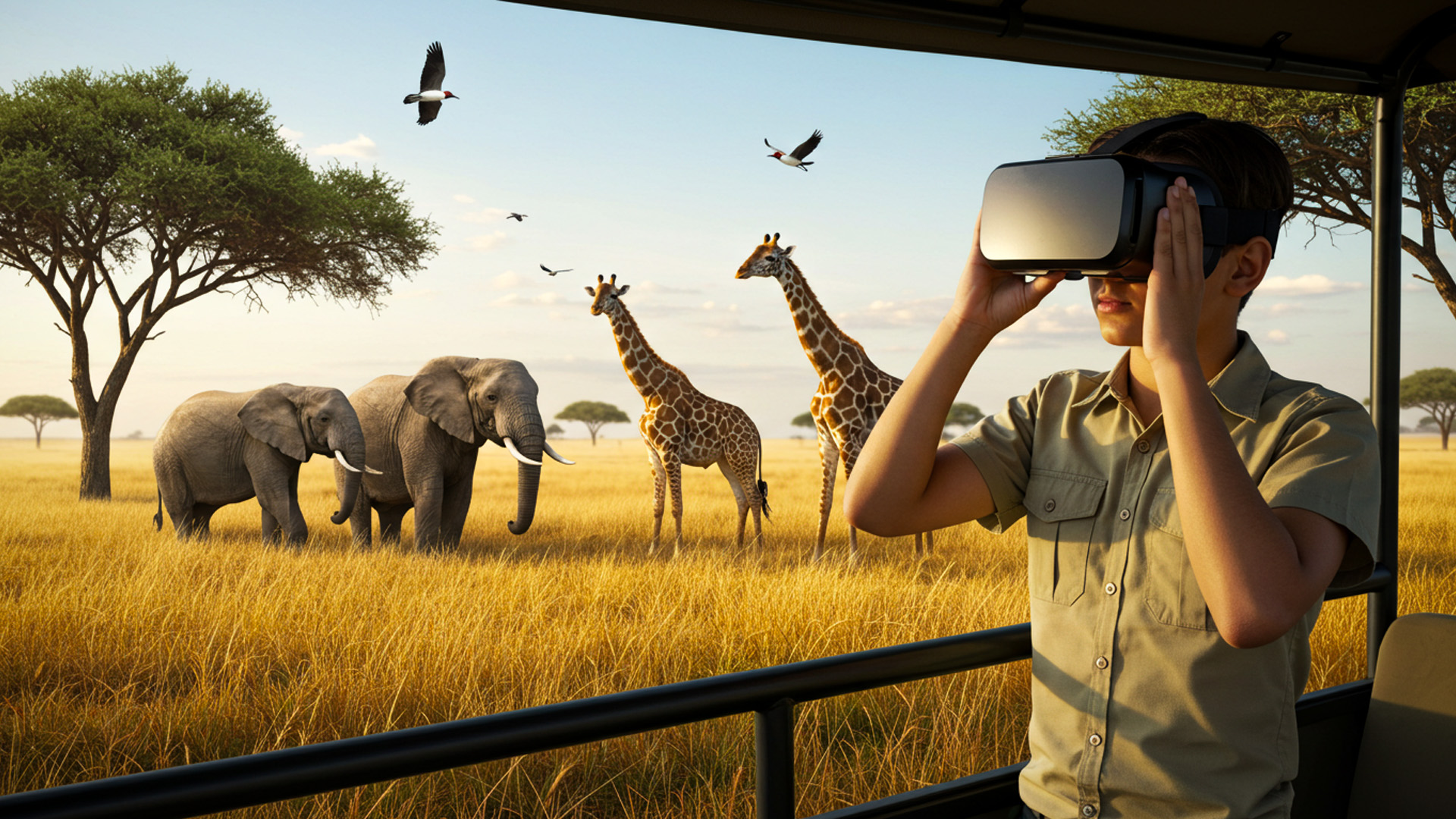
Immersive Wildlife Interactions: Beyond the Screen
Interactive Animal Behavior Simulations
Static animations cannot replicate the unpredictability of wild fauna. Interactive simulations harness AI-driven behavior trees and finite state machines to generate emergent wildlife narratives. Each animal avatar processes environmental stimuli—weather shifts, proximity to other creatures—triggering dynamic decision trees. Imagine a virtual elephant matriarch assessing herd safety by detecting distant thunder patterns; her next step might be to lead her calves toward a sheltering cluster of knobthorn trees. These procedurally generated scenarios deliver authenticity, ensuring that no two safari runs ever mirror each other, much like real-world wildlife patrolling its domain.
Developers calibrate locomotion patterns through motion-capture data overlayed on skeletal rigs, preserving articulation and weight shifts. Behavioral modifiers—hunger, distress, curiosity—infuse avatars with quasi-emotional states, prompting foraging or defensive postures. In one beta test at Addo, participants reported feeling uneasy when a virtual lioness stalked them through long grass, underscoring how algorithmic choreography can evoke genuine adrenaline responses and foster a profound appreciation for wildlife dynamics.
Haptic Feedback Integration
To transcend visual and auditory channels, some platforms integrate haptic vests and handheld controllers with programmable tactors. These devices translate physical phenomena—hoofbeats thudding on packed earth, gentle breezes rustling through acacia leaves—into nuanced vibration patterns. A pulse at the collarbone might signal a distant herd, while subtle back-rumble cues mimic low-frequency elephant calls. This tactile sublayer augments immersion, enabling users to 'feel' the throbbing heartbeat of the savanna as if standing beneath a baobab at dusk.
Developers employ tactile transduction mapping algorithms to correlate audio frequencies with haptic outputs, ensuring the vibration footprint aligns with the source location and intensity. During early trials at a VR lab in Cape Town, participants reported goosebumps when simulating a virtual rhinoceros charge—proof that well-calibrated haptics can trigger instinctual reactions and deepen emotional engagement beyond what sight and sound alone can achieve.
Multi-User Virtual Safari Expeditions
Wildlife tourism often thrives on shared experiences, and virtual safaris extend this camaraderie through networked expeditions. Architectures range from peer-to-peer mesh systems to dedicated server-client clusters, each addressing synchronization, latency, and data consistency. When multiple users converge at a virtual waterhole, the system reconciles positional data and avatar states in real time, ensuring that all participants witness the same elephant herd crossing. Scalable cloud infrastructures allocate compute resources dynamically, preventing desynchronization and maintaining frame coherence even under peak loads.
Imagine researchers in Johannesburg, London, and Tokyo donning VR rigs simultaneously to study mating rituals of white rhinos. As one observer spots a behavioral anomaly, the platform’s annotation tools allow real-time tagging and voice overlay, enabling colleagues to triangulate observations. This collective safari model not only enriches academic collaboration but also democratizes fieldwork for institutions lacking on-site access, forging a global convening space in the digital savanna.
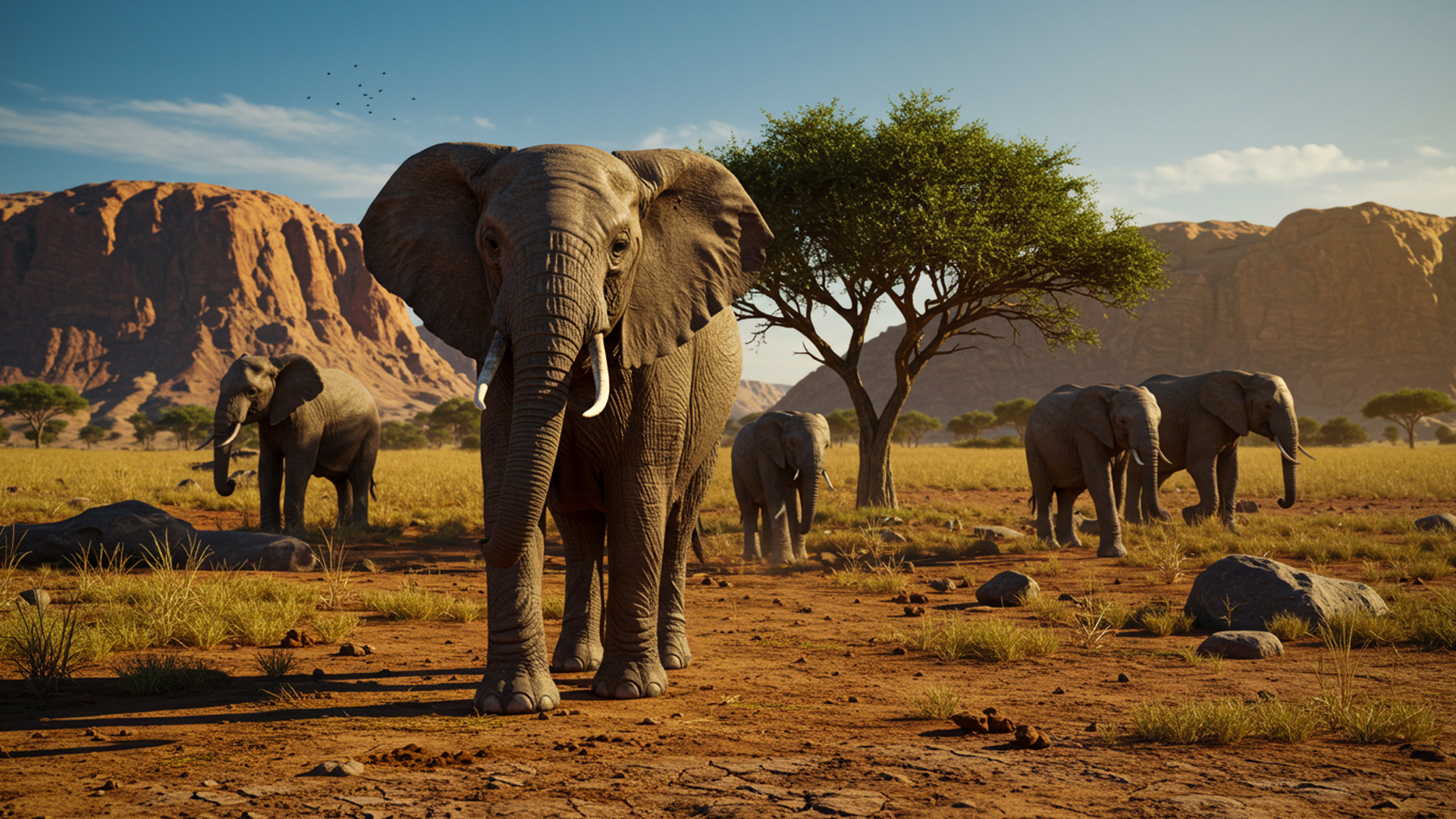
Educational Safaris: Learning in the Digital Savanna
Curriculum-Integrated Virtual Field Trips
Educational institutions are embedding virtual safaris into their syllabi by integrating with Learning Management Systems (LMS) and adhering to SCORM standards. Each expedition maps to specific learning outcomes—ecology, animal behavior, conservation ethics—enabling educators to assign preparatory materials, in-experience quizzes, and post-trip assessments. Students log entries in digital field notebooks, tagging species observations and habitat data in situ. This immersive pedagogy transcends textbooks, allowing learners to conduct virtual transect surveys or track GPS-tagged wildlife movements, fostering analytical skills through experiential inquiry.
By leveraging LTI integrations, schools can schedule virtual expeditions as modular course components. An analogy might be attending a virtual guest lecture, except here the guest is a digital lioness navigating her territory. Educators can replay sessions, annotate events, and export data logs for further analysis. This fusion of gamified exploration and structured curriculum empowers students to internalize complex ecological concepts via active participation rather than passive reception.
Augmented Interpretive Layers
Overlaying data-driven annotations onto immersive scenes brings deeper context to virtual safaris. Using geotagged hotspots, users can toggle layers revealing information on flora taxonomy, animal migration corridors, or conservation status. Clicking a zebra’s stripes might display its genetic lineage, while approaching a watering hole unveils historical rainfall patterns via graph overlays. This interpretive augmentation functions like digital placards in a museum but within a 360-degree ecosystem, transforming explorations into interactive scholarly dialogues.
In one pilot program, visitors to a virtual Addo reserve accessed an AR-style encyclopedia in mid-expedition. As they circled a tortoise basking on a rock, contextual buttons offered deep dives into shell morphology and desert adaptation strategies. Such cognitive scaffolding bridges the gap between wonder and comprehension, empowering users to become informed conservation advocates rather than passive spectators.
Assessment Through Immersive Quests
Gamification elements in virtual safaris gamely assess knowledge retention through branching narratives and logic puzzles. Participants might embark on a quest to locate a missing GPS collar or identify poaching hotspots using forensic clues embedded in the environment. Each correct deduction unlocks new regions or narrative beats, fostering critical thinking under simulated field conditions. This quest-based framework transforms assessment into an engaging odyssey rather than a conventional test, motivating deeper exploration.
During a trial with a conservation NGO, trainees raced against a virtual poacher’s timeline to secure a herd of sable antelopes. By solving ecological riddles and deploying UAV simulations, they not only learned anti-poaching protocols but also experienced the adrenaline of real-world decision-making. Such immersive assessments cultivate procedural memory, proving more effective than rote memorization for applied wildlife management skills.
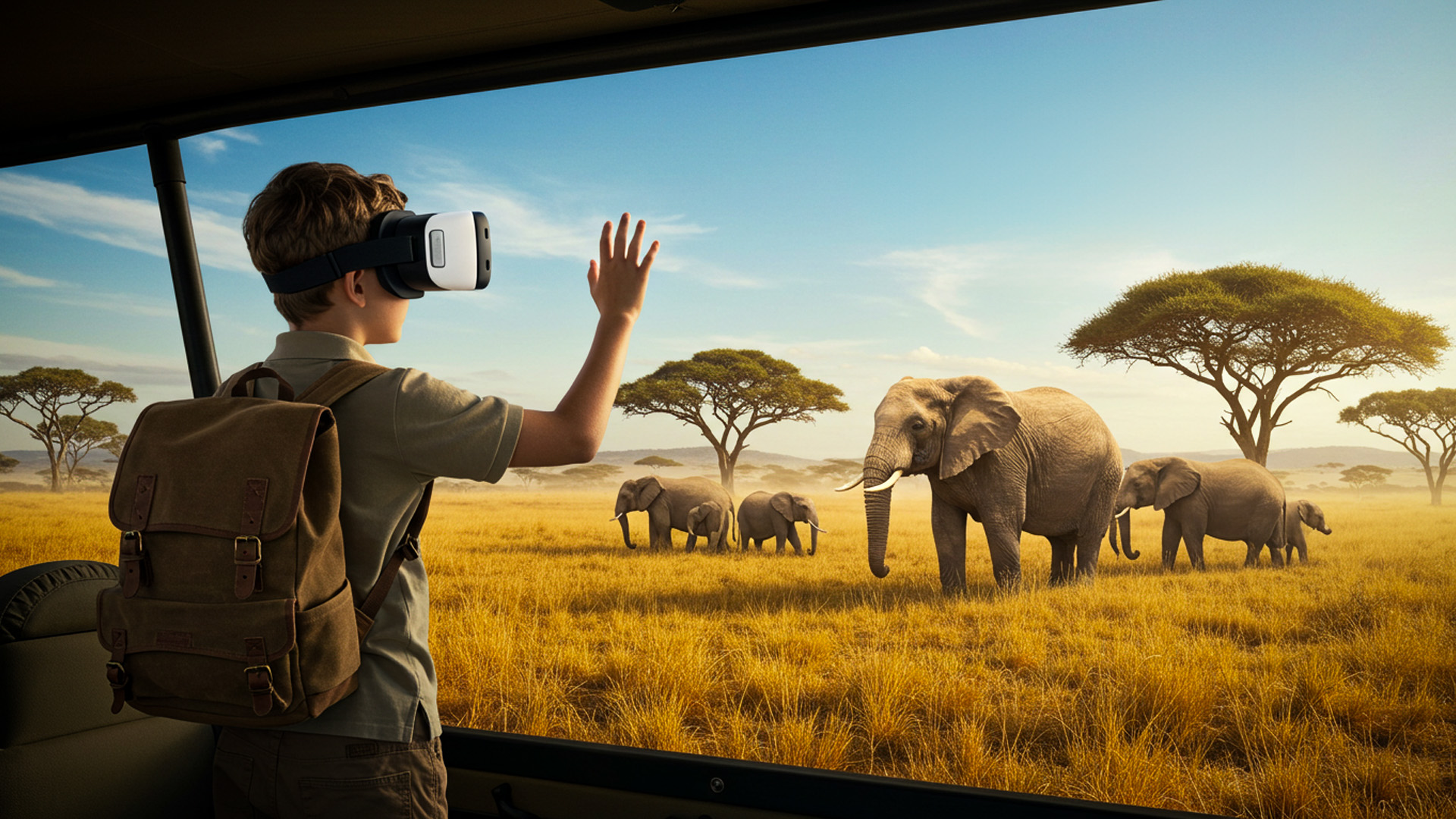
Challenges and Opportunities in Virtual Safari Adoption
Accessibility and Hardware Barriers
Despite technological strides, hardware fragmentation remains a hurdle. High-end headsets propped on desktop-grade GPUs deliver stellar fidelity but price out many potential users. Mobile VR compromises resolution and tracking precision, risking motion sickness if frame rates dip below 60 fps. Developers mitigate these issues through cloud-rendered streams and adaptive resolution scaling. By offloading compute to remote servers and dynamically adjusting LOD thresholds, platforms can deliver consistent experiences on mid-range devices, widening access without sacrificing core immersion metrics.
User experience designers also grapple with locomotion interfaces, balancing teleportation mechanics against virtual joystick controls to minimize cybersickness. Iterative playtests and biometric feedback loops—monitoring heart rate and galvanic skin response—inform refinements. As headset manufacturers converge on standard tracking APIs and ergonomic improvements, these combined optimizations promise to democratize virtual safaris for a broader demographic spectrum.
Ecological and Ethical Considerations
A virtual safari’s detachment from actual ecosystems raises philosophical questions: does a digital immersion dilute conservation urgency? Some argue that simulated encounters risk creating a veneer of experience, distancing users from on-the-ground challenges. Yet when leveraged responsibly, virtual safaris serve as digital ambassadors, fostering empathy and driving donations. By integrating calls-to-action—virtual adoptions of individual animals or crowd-funded habitat restoration—they can catalyze real-world impact, bridging the chasm between pixels and preservation.
Ethical design dictates accurate portrayals of habitat degradation, poaching threats, and climate stressors. Embedding realistic scenarios—like a virtual drought season with diminishing water sources—can underscore conservation narratives more viscerally than polished travel brochures. In this sense, the VR savanna becomes a living parable, urging users to become stewards of both digital and biological realms.
Commercial Models and Future Horizons
Commercialization strategies for virtual safaris span subscription services, per-experience licensing, and corporate sponsorship integrations. Wildlife NGOs might license bespoke experiences to educational platforms, while tourism boards could underwrite marketing portals featuring branded virtual lodges. Advertisers can embed targeted content—eco-tourism packages or conservation fundraisers—within the virtual environment, creating symbiotic revenue streams that support both development and on-the-ground initiatives.
Looking ahead, procedural ecosystem generation and AI-driven NPC fauna promise infinite savanna permutations. Emerging holographic projection technologies could one day dissolve headset barriers altogether, casting immersive safaris into public venues. As hybrid realities blend physical and virtual habitats, South African wildlife tourism stands poised on the cusp of an evolutionary leap, where bytes and biodiversity coalesce into a unified frontier of exploration.
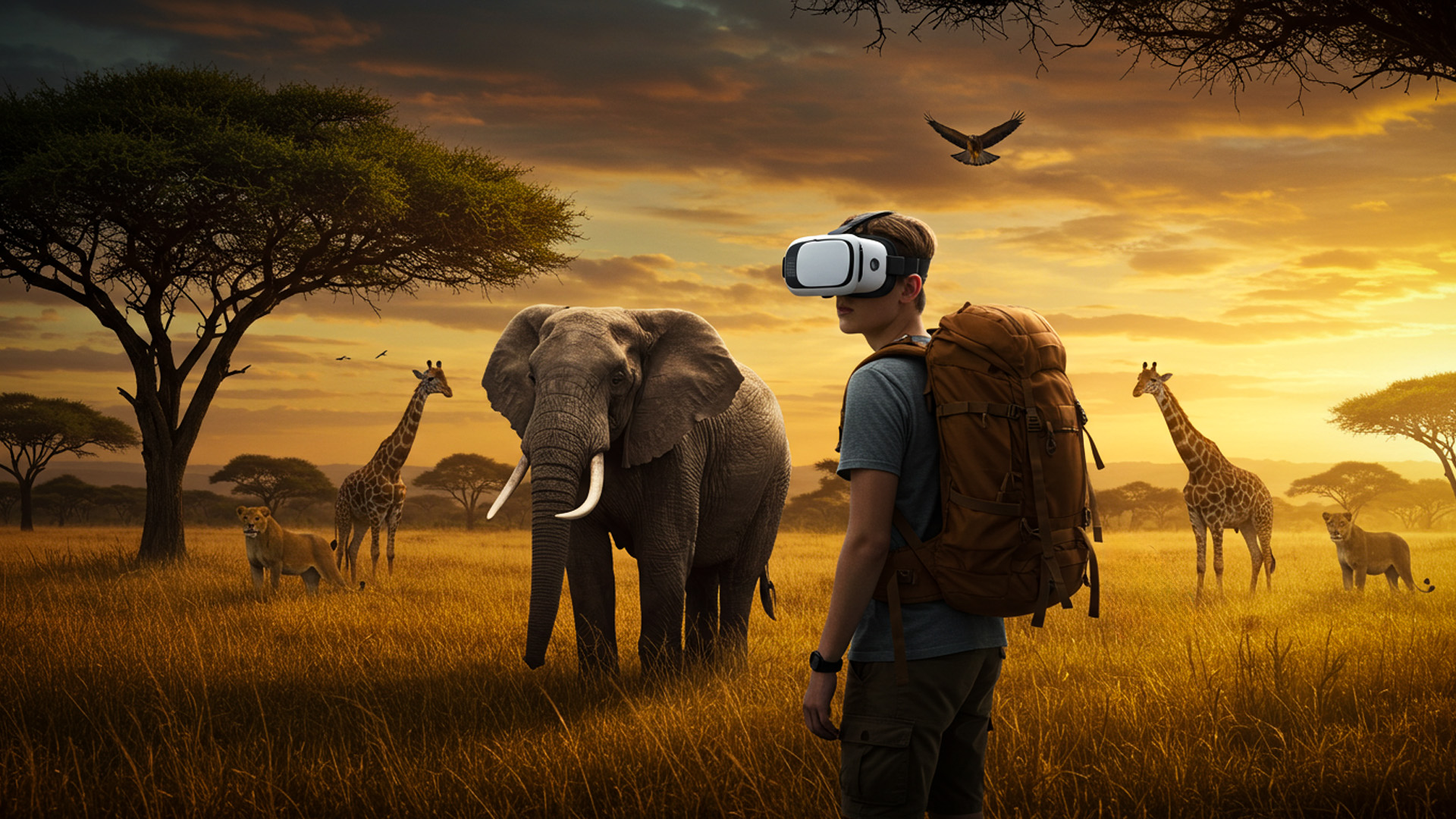
Challenges And Opportunities In Virtual Safari Adoption
Author: Elisha Roodt
Delivering expert insights into virtual reality, 360° production, and the immersive technological evolution across South Africa.