
How Virtual Reality Is Changing Education in South Africa
Virtual reality is helping South African schools, universities and training providers create more practical, engaging and accessible learning experiences through immersive simulations and virtual environments.
How Virtual Reality Is Changing Education in South Africa
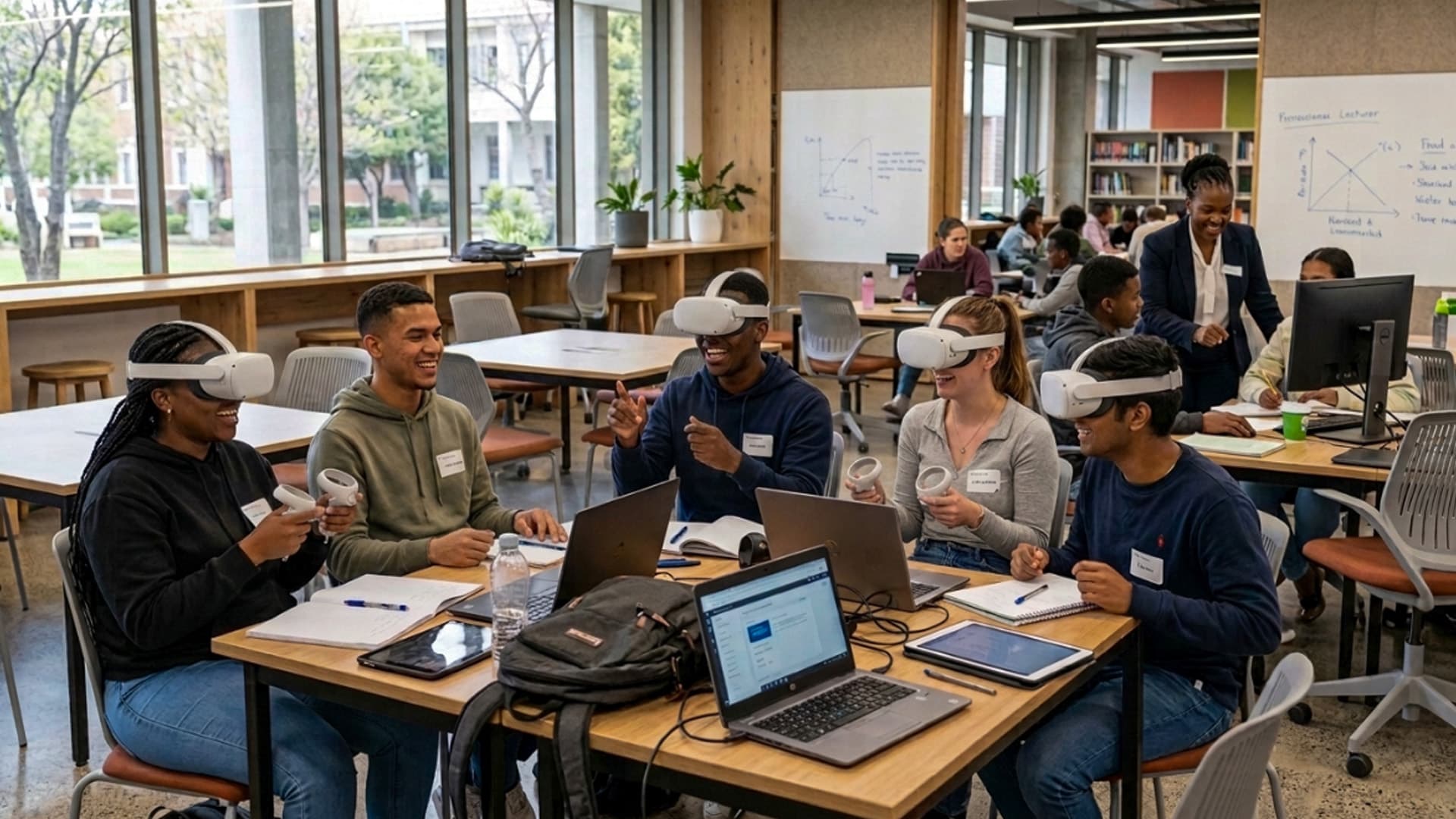
Virtual reality is becoming an increasingly important part of the education conversation in South Africa. For many years, VR was mainly associated with gaming and entertainment, but schools, universities, training providers and businesses are now exploring how immersive technology can make learning more practical, memorable and accessible. Instead of only reading about a process, watching a video or looking at a diagram, learners can enter a simulated environment and interact with the subject matter directly.
This matters because many subjects are difficult to teach through text alone. A learner can understand the theory behind a scientific experiment, a construction process or a medical procedure, but practical understanding often requires seeing how things work in context. Virtual reality can create that context without requiring every school or training provider to own expensive equipment, arrange travel or expose learners to unnecessary risk.
The opportunity is especially relevant in a country with diverse learning environments and unequal access to resources. VR will not replace teachers, classrooms or hands-on practical work, but it can become a useful additional tool when it is designed around real learning outcomes. The strongest applications are not built around the novelty of a headset. They are built around helping learners understand difficult ideas, practise important skills and gain confidence before applying knowledge in the real world.
Why Immersive Learning Is Gaining Momentum
Traditional learning methods remain important, but they are not always enough for every learner or every subject. Textbooks, lectures and presentations can explain concepts clearly, yet some topics require spatial understanding, movement, repetition or real-world context. This is where immersive learning can add value.
Virtual reality places the learner inside a three-dimensional environment where they can look around, move through a scenario and interact with objects. A geography lesson can become a virtual field trip. A science lesson can become an interactive laboratory. A technical course can allow learners to inspect machinery, identify components and practise procedures before working with real equipment.
This type of learning can be particularly useful when a physical experience is difficult to arrange. A class may not be able to visit a historical site, enter a factory, explore a remote ecosystem or access a specialist laboratory. VR can provide a structured alternative that gives learners a stronger sense of scale, place and process than a flat image or short video can provide.
Learning by Doing in a Safe Environment
One of the most useful features of VR is that it allows people to practise without the same consequences that may exist in the real world. This is valuable in training environments where mistakes can be expensive, disruptive or unsafe. Learners can repeat a process, make corrections and build familiarity before moving into a real workplace or practical setting.
For example, a learner studying electrical safety can work through a simulated environment that identifies hazards and tests decision-making. A healthcare student can explore a clinical scenario without putting a patient at risk. A construction trainee can become familiar with a site layout, safety procedures and equipment before entering a live project.
The goal is not to suggest that a virtual simulation is identical to real experience. Instead, it gives learners a valuable bridge between theory and practice. It can reduce anxiety for first-time learners, create more opportunities for repetition and help trainers identify where extra support may be needed.
Making Abstract Subjects Easier to Understand
Some subjects are difficult because the important parts cannot easily be seen or touched. Learners may need to understand how molecules interact, how an engine works internally, how a building structure carries weight or how a historical event unfolded across a large area. VR can make these concepts more visible by turning them into interactive three-dimensional experiences.
A learner can walk around a virtual model, examine it from different angles and see how separate parts connect. This can make complex information easier to discuss in class because the teacher and learners have a shared visual reference. Rather than asking students to imagine a process from a diagram, the lesson can show the process in motion and allow learners to explore it at their own pace.
Virtual Reality in Schools and Universities
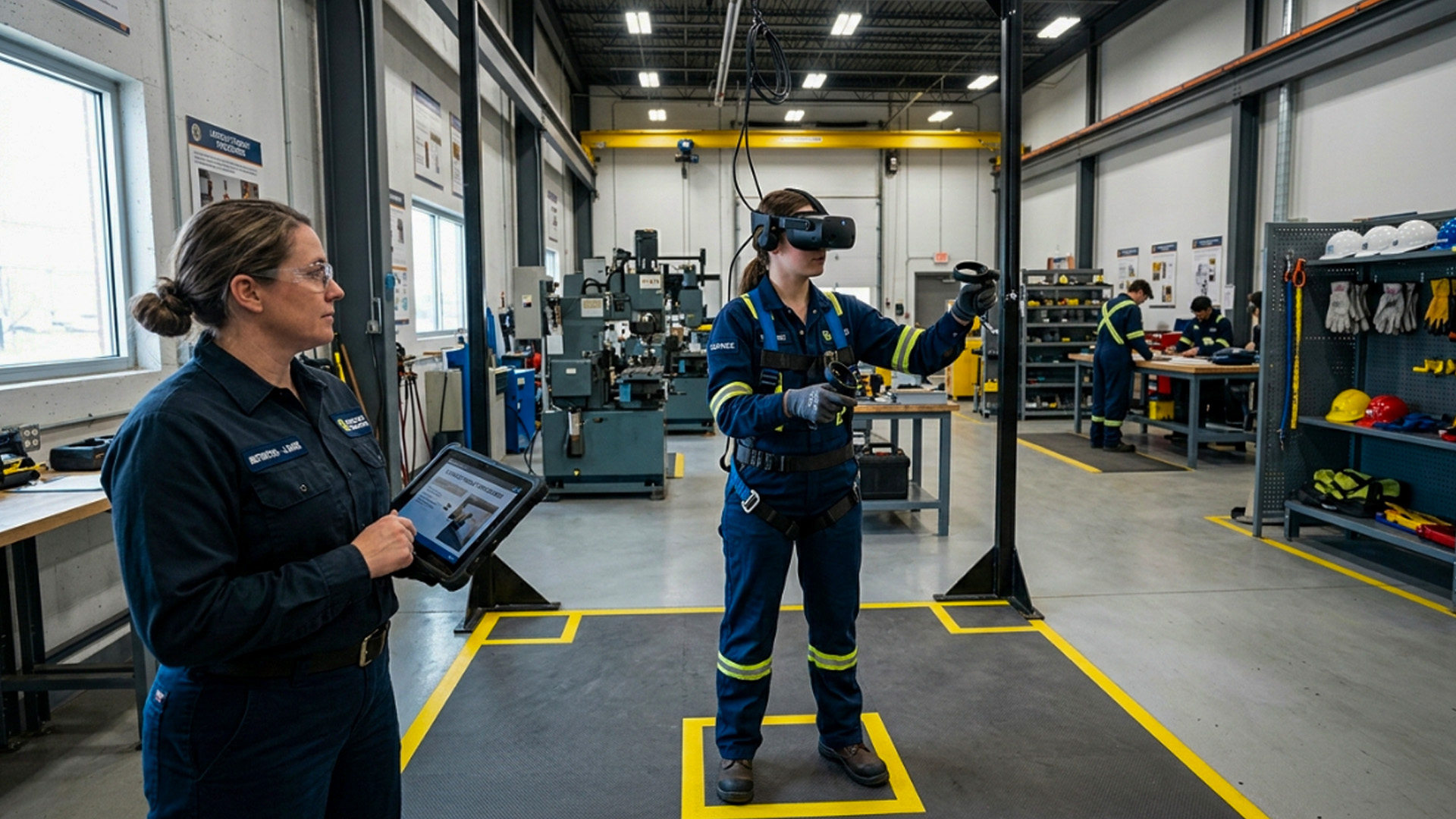
Schools and universities can use virtual reality in many different ways, from short classroom activities to full simulation-based modules. The most practical approach is usually to begin with focused experiences that support a specific lesson or skill. A short VR activity can be more effective than a long session if it has a clear purpose and is followed by discussion, assessment or practical work.
In schools, VR can support subjects such as science, geography, history, biology and technology. Learners can explore places that are difficult to visit, observe processes that are difficult to recreate in a classroom and engage with content in a more active way. In universities, immersive learning can support fields such as engineering, medicine, architecture, design, environmental studies and technical training.
The technology can also help institutions create more consistent experiences. A virtual laboratory or simulation can be repeated for different groups of learners, giving everyone access to the same core activity. This is useful when physical resources are limited or when a practical exercise needs to be completed safely before learners work with real tools and equipment.
Virtual Field Trips Beyond the Classroom
Field trips are valuable because they connect learning to the real world, but they are not always easy to organise. Travel costs, time, safety requirements and access limitations can prevent schools from offering every experience they would like to provide. Virtual reality can help by creating guided digital visits to places that learners may otherwise never see.
A class can explore a marine environment, walk through a historical site, visit a museum exhibition or observe a large industrial facility without leaving the school. These experiences should not be treated as a replacement for every real-world outing, but they can expand what is possible within a normal timetable and budget.
For South African learners, virtual field trips can also support local storytelling. Immersive content can be developed around local history, natural environments, cultural sites, engineering projects and industries. This gives students a chance to engage with learning material that feels connected to their own communities and future opportunities.
Supporting STEM and Technical Skills
STEM subjects often benefit from visualisation and practical experimentation. VR can help learners see how systems work, practise technical steps and explore scenarios that would be difficult to reproduce in a standard classroom. Engineering students can inspect virtual structures, design students can explore spatial layouts and science learners can conduct guided experiments in a simulated laboratory.
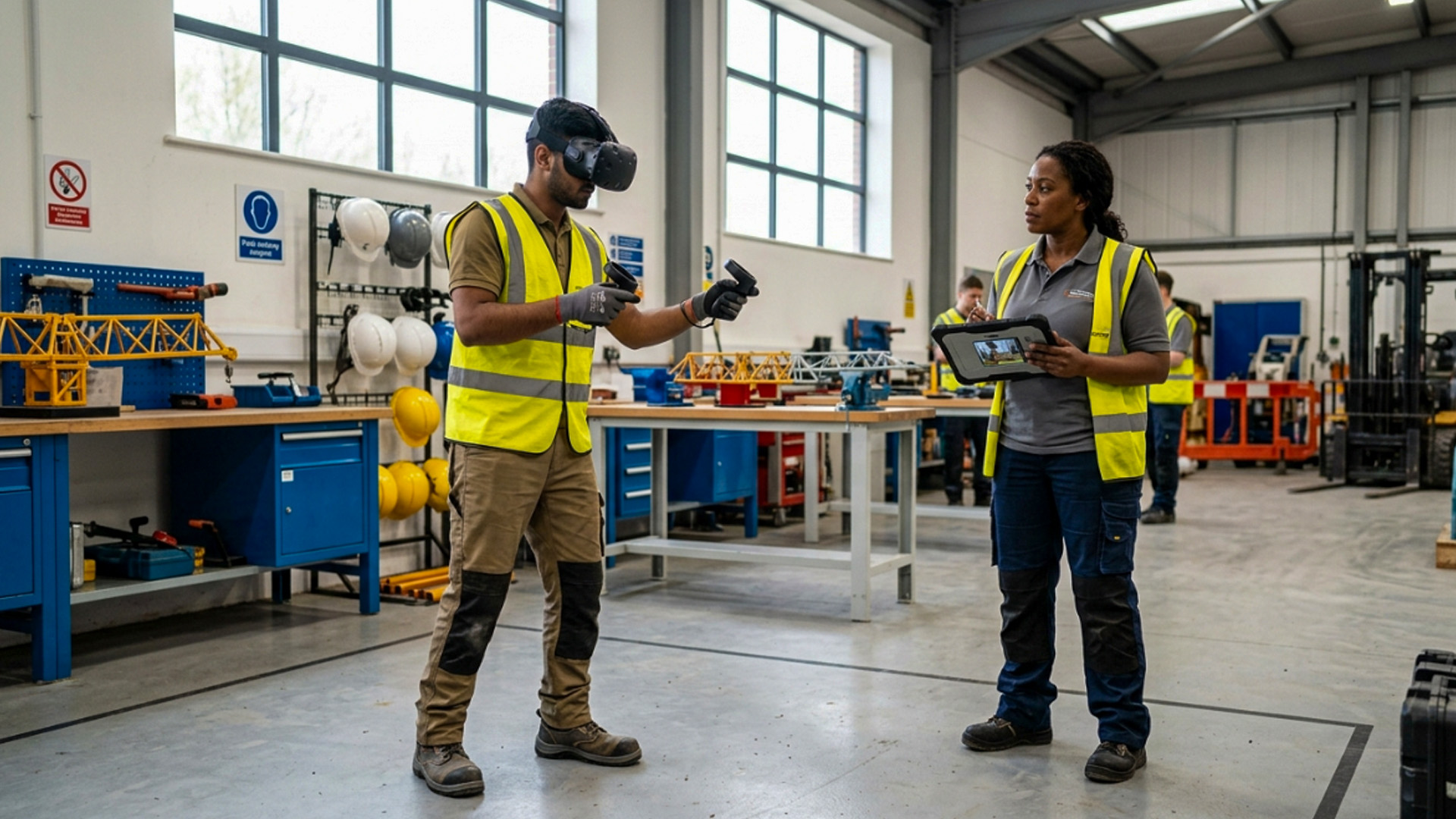
Technical and vocational training can benefit in similar ways. Learners can practise using tools, follow safety procedures and work through realistic tasks before entering a workshop or site. This does not remove the need for physical training, but it can help make physical sessions more productive because learners arrive with a clearer understanding of the task.
VR for Workplace Training and Skills Development
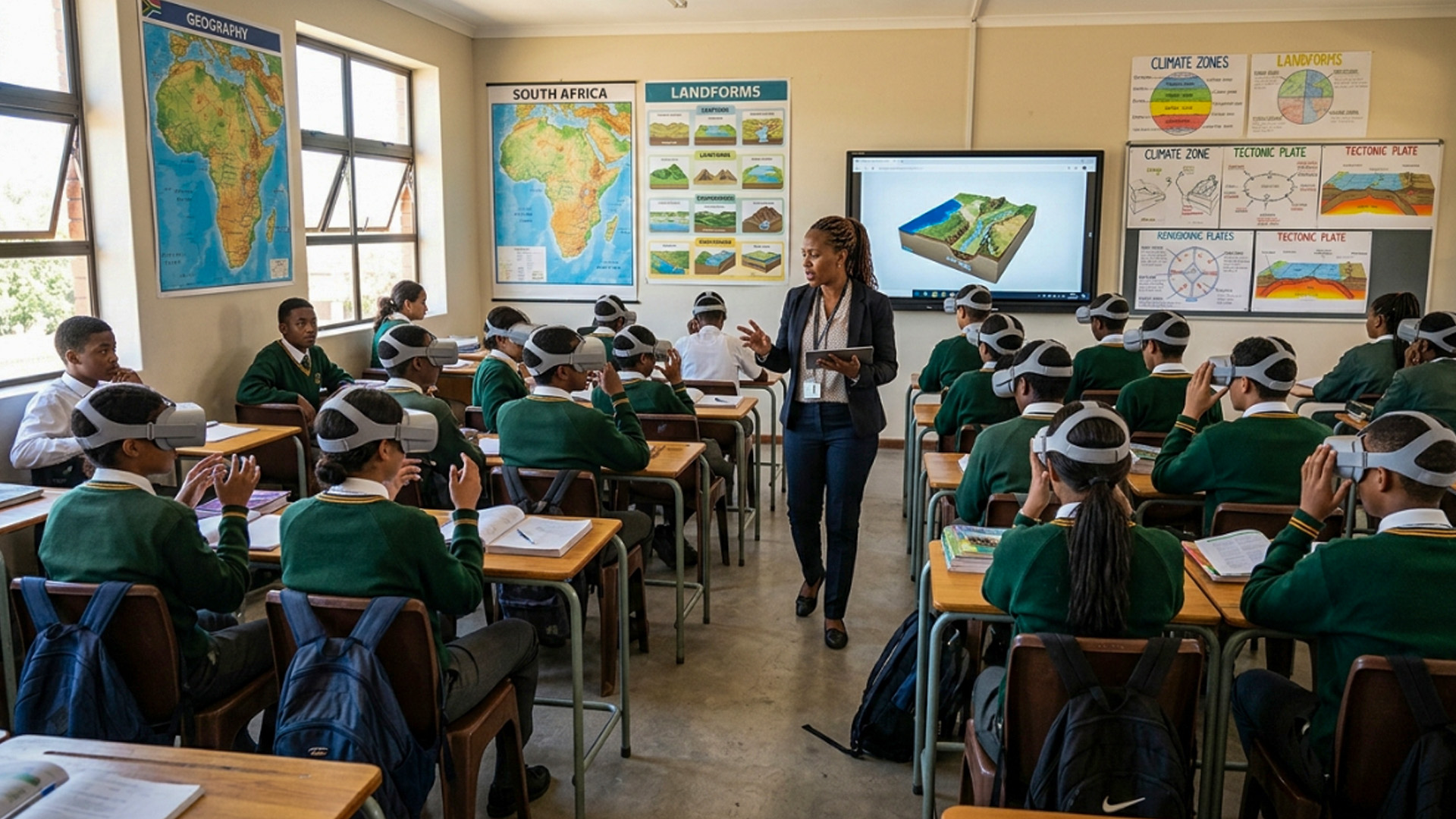
Education does not end when someone leaves school or university. Businesses across South Africa need to train employees, introduce new processes and maintain high standards in environments where mistakes can have serious consequences. Virtual reality can support workplace learning by creating repeatable simulations that are easier to scale than one-on-one practical instruction alone.
Industries such as manufacturing, logistics, healthcare, construction, mining, retail and hospitality can use VR to help employees prepare for real situations. A worker can practise identifying hazards, responding to a customer, operating equipment or following a safety process in a controlled environment. The training can be repeated until the learner feels more confident, and instructors can use the experience to identify areas that need further attention.
For employers, the value is not only in making training look more modern. It is in creating learning experiences that are focused, repeatable and relevant to the actual tasks people need to perform. A well-designed simulation can reduce the time spent explaining basic steps and give trainers more time to focus on coaching, feedback and practical assessment.
Better Preparation for High-Risk Environments
Some jobs require people to make good decisions under pressure. In these situations, it is not always possible or responsible to recreate every scenario during live training. VR can provide a safer way to practise responses to hazards, emergencies or complex procedures.
A learner can work through a simulated incident, identify the correct actions and see the consequences of different choices. This type of training can help people become more familiar with a process before they need to use it in a real setting. It also allows teams to repeat scenarios that may be rare but important.
The content must be accurate and designed with subject-matter experts. A headset alone does not create useful training. The learning value comes from realistic scenarios, clear objectives and feedback that helps people understand why a particular action is correct.
Soft Skills and Customer Interaction
VR is not only useful for technical training. It can also support communication, customer service, leadership and teamwork. A simulated environment can place a learner in a conversation with a virtual customer, colleague or member of the public, allowing them to practise how they respond to different situations.
This can be useful for hospitality, retail, healthcare and corporate training. Learners can practise active listening, clear communication and problem-solving in a setting that feels more realistic than a written role-play exercise. Trainers can then discuss the interaction, provide feedback and help learners improve their approach.
What South African Institutions Need to Consider
Virtual reality has strong potential, but successful implementation requires more than buying headsets. Schools, universities and training providers need to decide what learning problem they are trying to solve and whether immersive technology is the right tool for that specific purpose.
A clear learning objective should come first. If a lesson works well with a textbook, video or discussion, there may be no need to turn it into VR. The technology is most valuable when it gives learners access to a place, process or scenario that would otherwise be difficult to experience. This keeps projects focused and helps institutions use their budgets responsibly.
Teacher and facilitator support is equally important. Educators need time to understand the content, manage the equipment and connect the experience to the wider lesson. Learners should not simply use a headset and move on. The strongest results come when the immersive activity is followed by reflection, discussion, practical work or assessment.
Accessibility, Comfort and Inclusion
Not every learner will have the same experience with VR. Some may be unfamiliar with the equipment, some may need additional support and some may not be comfortable using a headset for long periods. Institutions should plan for short sessions, clear instructions, seated options where appropriate and alternative ways to access the learning content.
Accessibility also includes practical factors such as device sharing, charging, hygiene, internet access and technical support. A small pilot programme can help an institution understand these needs before expanding to a larger group of learners.
The aim should be to make immersive learning more inclusive, not to create a new barrier. When the technology is introduced carefully, it can support different learning styles and give learners more ways to engage with difficult material.
Content That Reflects Local Context
South Africa has a strong opportunity to develop VR education content that reflects local places, industries and communities. Learners are more likely to connect with an experience when it feels relevant to their own environment. A virtual tour of a local ecosystem, a simulation based on a regional industry or a history lesson connected to South African places can make learning feel more immediate.
Local content also creates opportunities for educators, developers, photographers, 3D artists and subject experts to work together. Building useful immersive education experiences requires more than technical skills. It requires accurate information, good storytelling and a clear understanding of how people learn.
The Next Stage of Immersive Education
The next stage of VR in education is likely to focus less on novelty and more on practical outcomes. Institutions will increasingly ask whether an experience improves understanding, helps learners practise a skill or makes training more accessible. This is a positive shift because it encourages better content, clearer objectives and stronger links between technology and real learning needs.
Artificial intelligence may also play a larger role by helping create more adaptive learning experiences. A simulation could provide extra guidance when a learner is struggling, offer more advanced challenges when they are progressing quickly or give educators clearer insight into where learners need support. These tools should be used carefully, with privacy and transparency built into the design.
Virtual reality will not solve every education challenge, and it should not be treated as a replacement for skilled teachers or real-world experience. Its value comes from giving learners a chance to see, practise and explore in ways that are difficult to achieve through traditional methods alone. For South African schools, universities and training providers, that makes VR an increasingly practical part of the future of learning.
Author: Elisha Roodt
Delivering expert insights into virtual reality, 360° production, and the immersive technological evolution across South Africa.